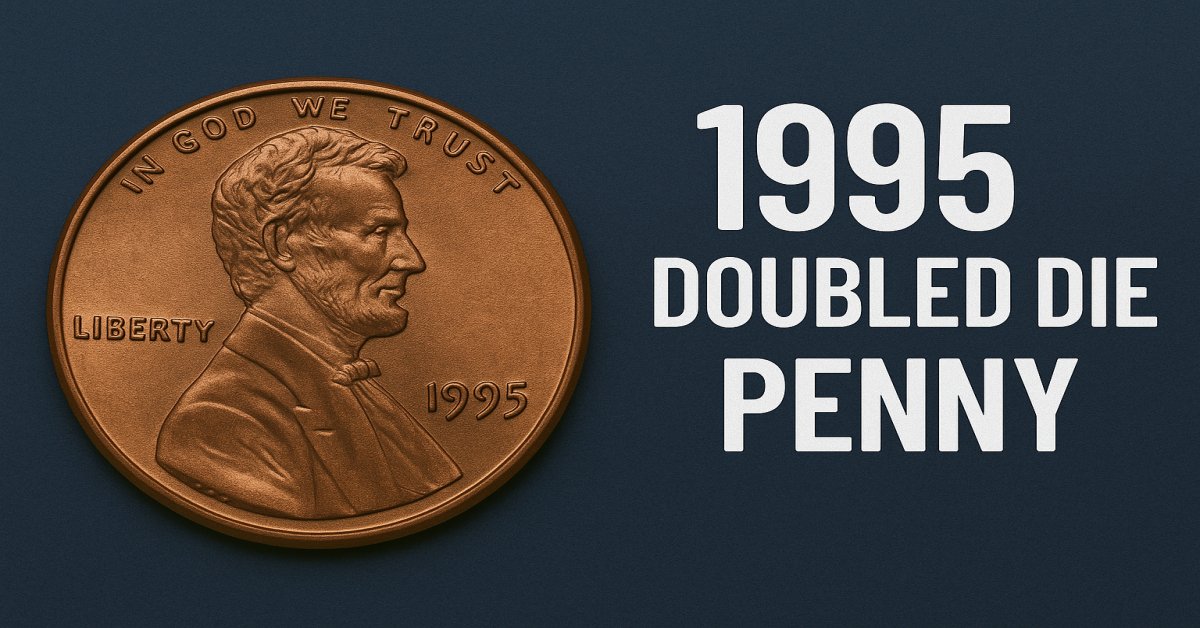

Most folks don’t give a second thought to a penny—they toss it into a jar, forget about it in a cupholder, or leave it sitting on a store counter because, honestly, what’s a cent worth these days? But every now and then, a coin pops up that reminds collectors—and everyday people digging through their junk drawers—that even the smallest change can carry a surprisingly big payday. The 1995 Doubled Die Penny is one of those little shocks to the system, a modern error coin that turned into a hobbyist favorite and, in some cases, a tidy little windfall.
What Makes the 1995 Doubled Die Penny a Standout
A doubled die is one of those quirks of minting that sounds technical until you see it—then it’s almost impossible to miss. When a die, the stamp that imprints a coin’s design, gets engraved twice at slightly different angles or positions, you get that shadowy, doubled look collectors love. And in 1995, the Philadelphia Mint had a memorable hiccup.
The result? Tens of thousands of pennies with dramatic, unmistakable doubling on the obverse. Not subtle. Not “if you squint under the kitchen light you might maybe see it.” This is bold, textbook doubling—the kind of error that made longtime collectors sit up and newer ones go, “Wait, this could actually be in my change?”
Where You’ll Spot the Doubling
If you’re checking a handful of old pennies—and let’s be honest, most of us have at least one jar that’s been collecting dust for a decade—focus your eye on the lettering.
The easiest places to catch the doubling:

- LIBERTY: The letters show thick, shadow-like outlines, almost as if someone printed the word twice.
- IN GOD WE TRUST: This inscription carries the same doubled punch, especially on the first few letters.
No special lighting setups required. A basic magnifying glass, or that phone camera zoom you’ve used for everything from receipts to ant trails, should do the trick.
How Much This 1995 Doubled Die Penny Can Actually Be Worth
Values vary more than you’d expect for a coin minted by the millions, but that’s the power of strong visual errors.
Here’s how the market generally shakes out:
| Condition | Typical Value Range | Notes |
|---|---|---|
| Circulated | $3 – $20 | Common but still collectible; price depends on clarity of doubling |
| Uncirculated (raw) | $30 – $100 | Stronger demand from collectors |
| Certified MS-65 | $75 – $150 | Third-party grading boosts confidence and price |
| Certified MS-66 | $150 – $300 | Sweet spot for serious hobbyists |
| Certified MS-67+ | $300 – $600+ | Premium category; values jump fast for eye appeal |
Prices rise and fall with the broader coin market, but the 1995 Doubled Die has held steady popularity for nearly three decades. It’s affordable enough for beginners but still rare enough to feel like a real find.

Why This Penny Became a Collector Favorite
Older doubled dies—think the legendary 1955 or 1969-S—are rare, expensive, and usually out of reach for casual hobbyists. The 1995 version bridges the gap between “too common to matter” and “priced like gold jewelry.”
Three things helped it earn a loyal following:
- Dramatic visibility: No need to be an expert. The doubling jumps out.
- Wider availability: Enough were released into circulation that people actually had a chance to find one.
- Modern appeal: It proved modern coins can still surprise collectors, even in an era of high-tech minting.
Ask any longtime numismatist—they’ll tell you this coin helped spark a whole new wave of interest in modern error collecting.
How to Check Whether You Have the Valuable Version
You don’t need a full-blown coin lab to verify one of these. Just take these steps:

- Pull out pennies from the early-to-late ’90s, especially bank rolls or jars that haven’t been touched for years.
- Check the obverse lettering under bright, even light.
- Compare with a regular 1995 penny to make the doubling stand out more clearly.
- Avoid cleaning the coin—seriously, don’t. Cleaning destroys value.
- Consider certification if your coin looks crisp or unused. A graded MS specimen can jump significantly in value.
Most folks who strike gold with these find them in stashed-away rolls or old change jars from before digital wallets took over.
Collector Market and the Penny’s Staying Power
Even though this isn’t a once-in-a-generation rarity, the 1995 Doubled Die Penny has something most modern coins don’t: longevity. It’s held collector interest for nearly 30 years, and auction records show steady activity. As more circulated examples get lost or damaged, higher-grade coins naturally creep upward in price.
There’s also nostalgia at play. For people who grew up in the ’90s, owning a mint error from the same era hits differently. It turns a tiny piece of pocket change into a bit of personal history.
The 1995 Doubled Die Penny is a reminder that even in an age of digital payments and virtual wallets, physical change still has stories to tell—and sometimes, surprising value to offer. If you’ve got a jar of pennies sitting around, give it a second look. Your next little windfall might be hiding right at the bottom.

FAQs
How rare is the 1995 Doubled Die Penny?
It’s not ultra-rare, but significantly scarcer than standard 1995 pennies. Enough exist for collectors, but high-grade versions are limited.
Can I find one in circulation today?
It’s possible, though far less common now. Most people have pulled them from circulation by this point.
Should I clean the coin before selling it?
No, cleaning damages the surface and reduces value, sometimes by more than half.
Do all 1995 pennies have doubling?
No. Only those struck with the specific doubled die show the strong doubling on LIBERTY and IN GOD WE TRUST.
Is professional grading worth it?
Yes for uncirculated or very clean examples. Lower-grade circulated coins typically don’t justify the grading cost.
