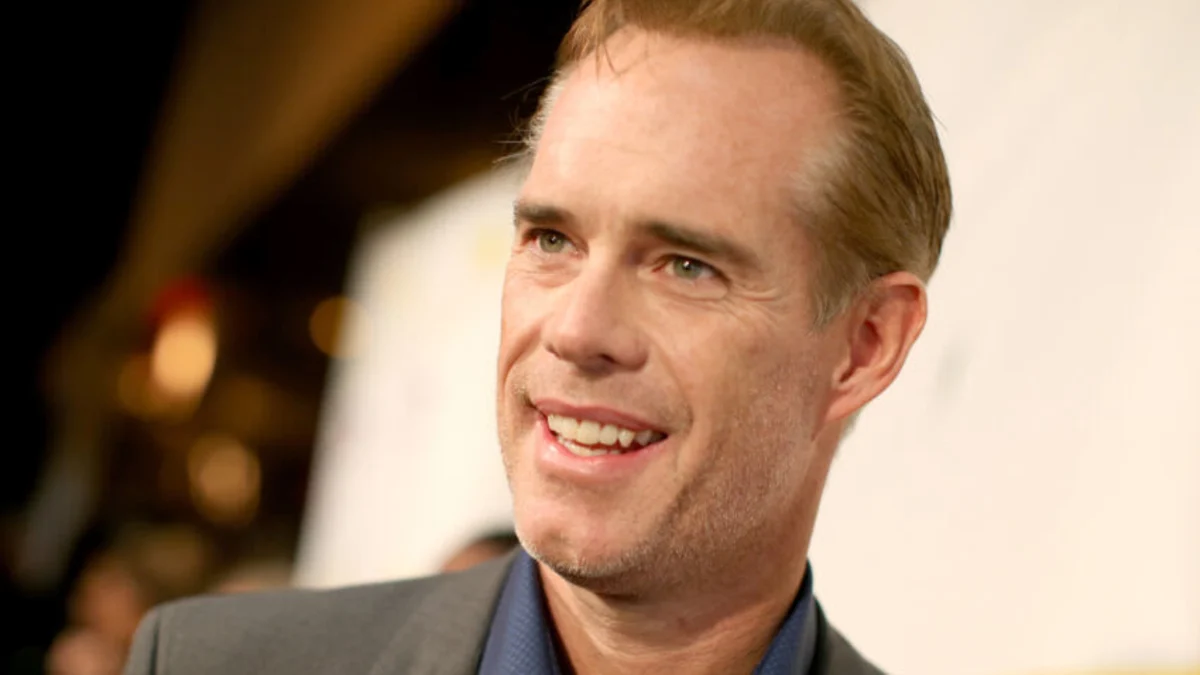

Joe Buck didn’t just stumble into sports broadcasting. He grew up in it. As the son of Hall of Fame announcer Jack Buck, he spent his childhood soaking in dugout chatter, press box banter, and a masterclass in storytelling. That early exposure paid off early. By 25, he became the youngest NFL play-by-play announcer in history when Fox hired him in 1994.
From that moment on, Buck wasn’t just following a legacy. He was building his own. Over the next two decades, he became the voice behind 23 World Series, six Super Bowls, and more than 20 MLB All-Star Games. His long-running booth partnerships with Tim McCarver in baseball and Troy Aikman in football helped turn routine broadcasts into comfort viewing for millions of sports fans.
Career High Points That Shaped a Fortune
Fox became Buck’s primary stage for nearly 30 years. He called some of the most memorable moments in modern sports, including Mark McGwire’s record-breaking 62nd home run in 1998. His voice became synonymous with baseball’s biggest storylines and the NFL’s most-watched games.
Awards followed the longevity. In 2020, he received the Pro Football Hall of Fame’s Pete Rozelle Radio-Television Award, the industry’s version of a lifetime achievement nod. Even with critics occasionally taking aim at his delivery, Buck’s consistency and polish kept him at the top of the broadcasting ladder.

The biggest career shift came in 2022 when he and Aikman made the stunning move from Fox to ESPN, taking over Monday Night Football. It ended a long era but gave the duo a high-profile prime-time platform that brought renewed energy to the franchise.
Inside Joe Buck’s Massive ESPN Deal
Buck was already one of the highest-paid broadcasters at Fox, where his salary climbed from about $6 million to an estimated $11 million in his final years there. But ESPN pushed those numbers into a new tier.
His current contract with ESPN, signed in March 2022, reportedly spans five years and lands somewhere between $60 million and $75 million total. That places his annual earnings between $12 million and $15 million, positioning him alongside the highest-paid voices in sports broadcasting.

By 2025, he’s deep into year four of that deal, and no renegotiations have surfaced publicly. That steady, top-tier salary forms the backbone of his estimated $35 million net worth.
Endorsements and Extra Income That Keep His Earnings Growing
Broadcasting may be Buck’s main gig, but it’s far from his only income stream. His recognizable voice and credibility have made him a magnet for long-term brand deals. Companies like Budweiser, Holiday Inn, and National Car Rental have all tapped him for commercials and voiceover campaigns.
His 2016 memoir, Lucky Bastard, continues to bring in royalties, and occasional appearances on shows like Jeopardy! and The Tonight Show widen his cultural footprint. Add in frequent speaking engagements, legacy residuals from archived broadcasts, and decades of highlight usage, and it’s clear that Buck’s income stretches well beyond the broadcast booth.

Smart Real Estate Moves Back Home
While many sports personalities set up shop in New York or Los Angeles, Buck has maintained strong ties to St. Louis. His real estate moves there have been both personal and financially smart.
In 2021, he sold a Ladue estate he bought for $2.36 million back in 2013, flipping it for about $3.3 million. He also purchased another nearby mansion for roughly $4.5 million, a property that features more than 6,500 square feet of upscale Midwestern luxury. These transactions show a deliberate approach to long-term wealth building rather than flashy splurges.
What Joe Buck’s Net Worth Says About His Staying Power
As of 2025, Joe Buck’s $35 million net worth reflects three decades of relevance in one of the most competitive corners of media. His ESPN contract remains one of the richest in sports broadcasting, his endorsements continue to land, and his investments show discipline rather than excess.

With Monday Night Football firmly in his hands and his partnership with Troy Aikman still going strong, Buck’s financial trajectory looks steady for years to come. In a field where voices fade fast, his continues to define the biggest moments in American sports.
