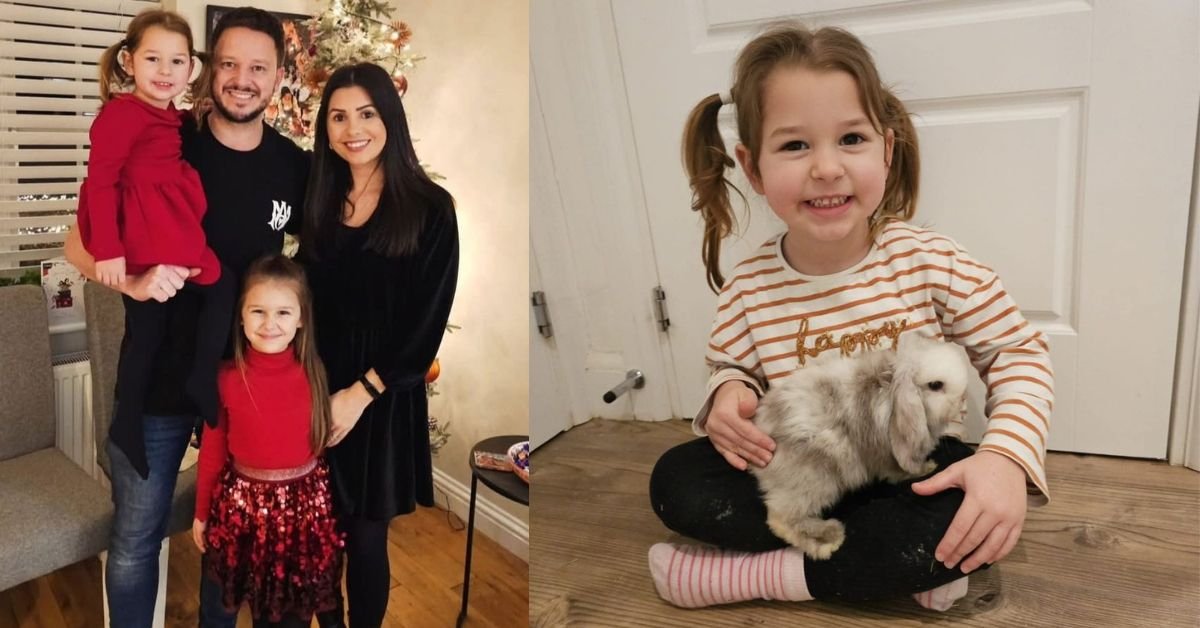

For Gary and Angelina Dunion, life changed in ways they could never have imagined after their four-year-old daughter, Sienna, caught what seemed like a routine case of flu. Until mid-November, Sienna had been a happy, healthy child with no underlying medical conditions. Now, her family is preparing for years of rehabilitation as she learns how to walk and talk again.
From Excitement to Illness in Days
The first sign something was wrong came when Sienna asked to come home just minutes after heading out to play on her scooter. She had recently been told she would be travelling to Lapland for Christmas and was full of excitement, but she also complained of feeling cold and unwell.
When her temperature rose, her parents decided to keep her home from school on Monday, November 17. Despite the fever, she was still playing with her toys, and there was little reason for alarm.

That changed two days later.
A Sudden Medical Emergency
On Wednesday morning, Sienna became unresponsive. A rush to A&E in Kettering quickly escalated into every parent’s worst nightmare. Sienna was placed into an induced coma and later diagnosed with Acute Necrotising Encephalitis (ANE), an extremely rare and severe brain condition often triggered by viral infections such as influenza.

ANE causes rapid neurological deterioration and is so uncommon that there is no standard treatment pathway. Doctors at Nottingham’s Queen’s Medical Centre designed a tailored plan, including plasma exchange therapy to reduce inflammation in her brain.
Complications Beyond the Brain
As if the diagnosis was not devastating enough, further complications followed. On November 22, doctors discovered dangerous levels of fluid in Sienna’s abdomen. Emergency surgery was required, resulting in the removal of 60 percent of her intestines. She has since undergone additional surgeries and now lives with a stoma bag and permanent short bowel syndrome.

Her father described that night as the hardest of his life.
A Long Road Ahead
Although Sienna is no longer in a coma, doctors have told her parents she will not return to the child she once was. She is awake but unable to track her eyes, eat independently, or understand what is happening around her. Intensive rehabilitation lies ahead, including physiotherapy, speech and language therapy, and feeding support.

The family is now preparing for months in a neurology ward and raising funds to adapt their home and secure specialist care.
A Family Holding On to Hope
Perhaps the most heartbreaking challenge is explaining the situation to Sienna’s seven-year-old sister, her best friend. She keeps asking when they can be a family again.
Sienna was known for her kindness, her infectious laugh, and her love for being around other children. Whether that laugh will return is unknown, but her family is holding onto hope as they face an uncertain future together.
