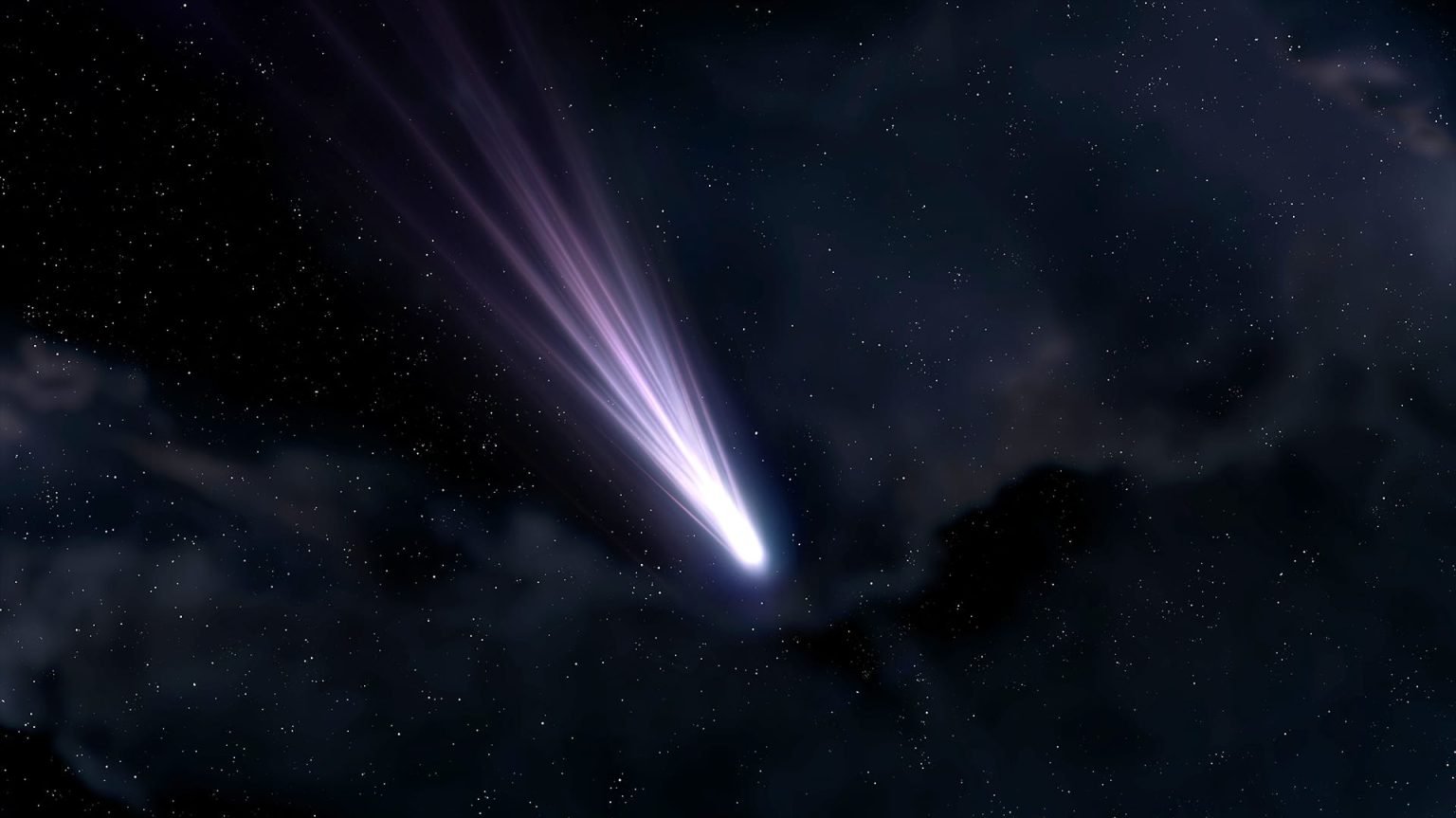

Astronomers are witnessing something genuinely rare. Comet 3I/ATLAS, officially designated C/2025 N1, is only the third confirmed interstellar object ever observed passing through our solar system. Discovered on July 1, 2025, by the NASA-funded ATLAS survey in Chile, this comet originated far beyond the Sun’s gravitational reach, making it a true visitor from another star system.
What Makes 3I/ATLAS Special?
Unlike typical comets that orbit the Sun in long, looping paths, 3I/ATLAS follows a hyperbolic orbit, meaning it is not bound to our solar system. This trajectory confirms it entered from interstellar space and will eventually leave forever.

The comet reached perihelion on October 29, 2025, coming within about 1.36 astronomical units (AU) of the Sun. Its closest approach to Earth occurred on December 19, 2025, at roughly 1.8 AU, or around 269 million kilometers away.

Where Is the Comet Now?
As of mid-December 2025, 3I/ATLAS is located in the constellation Leo and is best seen in the pre-dawn sky. It rises in the east-southeast and reaches its highest point shortly before sunrise.

The comet’s brightness currently sits between magnitude 11 and 12, which places it well beyond naked-eye visibility. Even binoculars struggle to pick it up reliably.

Can You See It From Home?
Yes, but you’ll need the right equipment and conditions.
Telescope Requirements
- Minimum aperture: A 6–8 inch (150–200 mm) telescope is recommended for clear visual detection. At this size, the comet appears as a faint, fuzzy patch with a slightly brighter center.
- Best views: Telescopes 10 inches (250 mm) or larger provide noticeably better detail, including a more defined coma and hints of a faint tail.
- Smaller scopes: Telescopes under 6 inches may detect it only under exceptionally dark skies and with experienced observers. Smart telescopes can help by precisely locating the comet.
Observing Tips
- Observe from dark skies (Bortle 4 or better), far from city lights.
- Use low to medium magnification (20–80x) to improve contrast.
- Rely on updated finder charts or astronomy apps, as the comet moves quickly against background stars.
How Long Will It Be Visible?
3I/ATLAS is already beginning to fade as it travels away from both the Sun and Earth. By early 2026, it is expected to dim beyond magnitude 13, placing it out of reach for many amateur setups.
A Rare Opportunity
While not a showy comet, 3I/ATLAS offers something far more compelling: the chance to observe material from another star system with backyard equipment. For amateur astronomers, it’s a subtle but historic target, and a reminder of how dynamic and interconnected our galaxy truly is.
