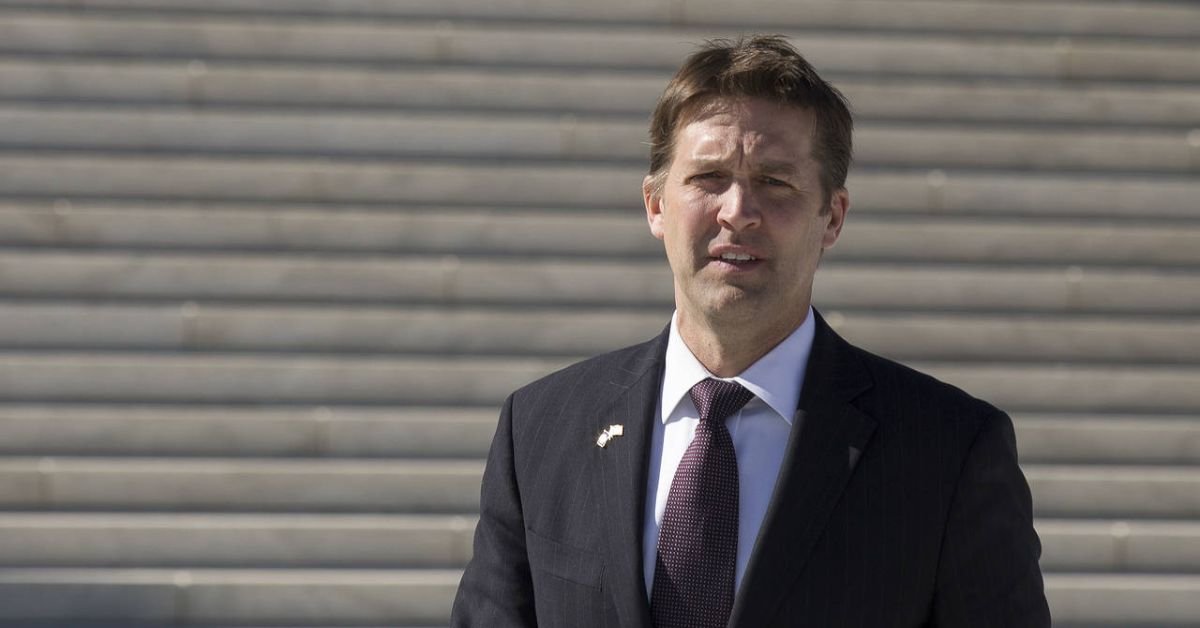

Former U.S. Senator Ben Sasse has never been one to mince words. And on Tuesday, he delivered one of the most brutally honest personal announcements we’ve seen from a public figure in recent memory: Stage 4 pancreatic cancer. “It’s a death sentence,” he wrote on X. Not couched in hopeful euphemisms or polished political language just raw, unfiltered reality.
The 53-year-old former Nebraska lawmaker revealed the diagnosis came just last week. “I’m gonna die,” he posted, before adding something that hit even harder: “But I already had a death sentence before last week too — we all do.” It’s a sentiment that sounds more philosophical than fatalistic, and for those who’ve followed Sasse over the years, it tracks. He’s long been one to wrestle publicly with big, existential ideas—often from the Senate floor, or more recently, the university pulpit.
But now, the fight is personal.
A Senator, a President, a Husband, a Dad
Sasse left the Senate in early 2023 to become president of the University of Florida, a move that raised eyebrows at the time—both for the optics of a sitting U.S. Senator jumping to academia and the politically fraught process that followed. That transition didn’t last long. He stepped down from the university last year amid serious health struggles within his family, particularly his wife’s battle with epilepsy and memory loss.

Now, just months later, it’s his own health crisis dominating the story.
“This is hard for someone wired to work and build, but harder still as a husband and a dad,” Sasse wrote, nodding to his wife and three children. And while the politics are receding into the background, it’s hard not to remember the man’s Senate record, especially when he says he’s not backing down from this fight.
From the Senate Floor to the Oncology Ward
Sasse was never a backbencher in the Senate. Elected in 2014 as a sharp, policy-minded conservative with a PhD in history, he branded himself as a constitutional conservative and was often critical of both parties—particularly his own. He was one of just seven Republican senators who voted to convict Donald Trump during the second impeachment trial following the January 6th attack on the Capitol.

It’s worth noting: only three of those seven are still in the Senate. The rest, like Sasse, have stepped away—voluntarily or otherwise.
But politics isn’t the headline today. Cancer is.
And not just any cancer—pancreatic, Stage 4, metastatic. The same aggressive disease that claimed lives like Steve Jobs, Ruth Bader Ginsburg, and Alex Trebek. According to the American Cancer Society, the five-year survival rate for Stage 4 pancreatic cancer is grim—around 3%. It’s notoriously hard to detect early and even harder to treat.

Holding Onto Grace, Gallows Humor, and Science
If there’s a theme to Sasse’s post, it’s that even in the face of terminal illness, there’s room for grace—and grit.
He called out the “jawdropping advances science has made the past few years in immunotherapy and more,” acknowledging the slim but real progress being made in treating cancers once considered completely untouchable. It’s not just about prolonging life anymore—it’s about how you live while dying.
“We’re zealously embracing a lot of gallows humor in our house,” Sasse wrote. “I’ve pledged to do my part to run through the irreverent tape.”

That line alone says volumes about the kind of journey he intends to take from here.
Not a Goodbye Yet
The post ends with a subtle promise: “I’ll have more to say.”
And honestly, no one doubts that. If history is any indicator, Sasse won’t go quietly. Whether from the Senate floor, a university podium, or now from a hospital bed or treatment room, he’s made a career out of speaking his mind. It appears he’s going to continue doing just that—on his own terms, even with a terminal diagnosis looming.
He may have called this a death sentence, but the way he’s framing it, it’s also a call to live, loudly and with purpose. In a time when politicians often dodge vulnerability, Sasse’s raw honesty is a reminder that behind the press releases and voting records are real people facing real life.
Even when that life includes cancer.
