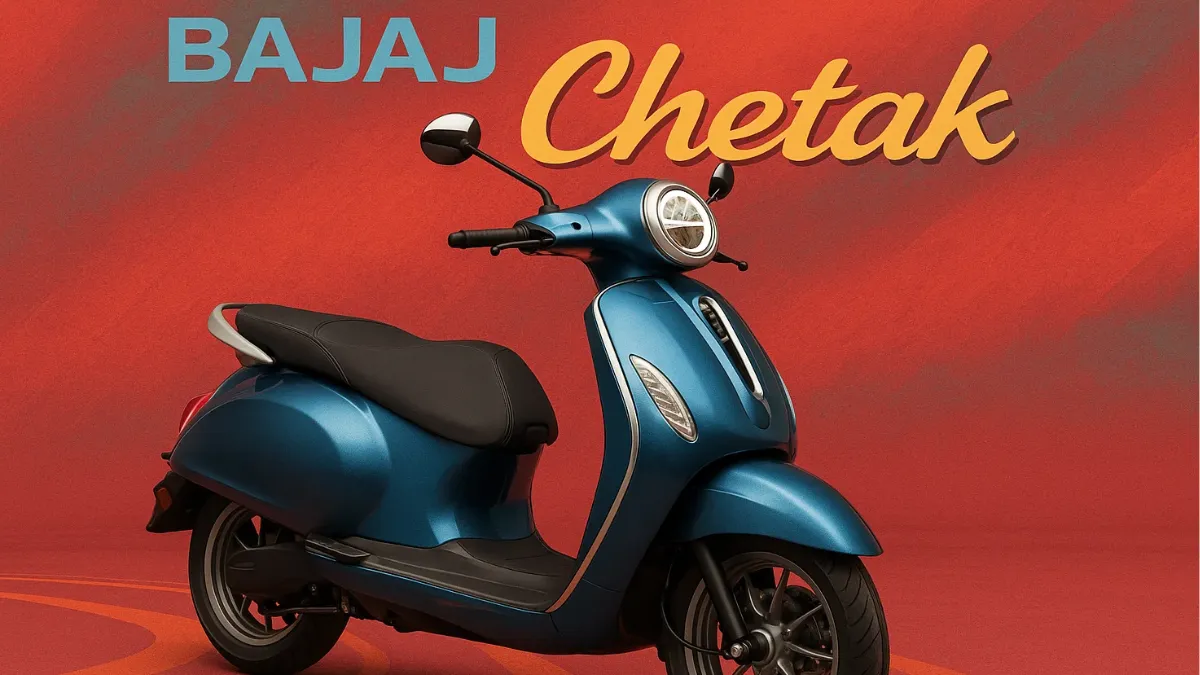

The legend is back—and this time, it hums instead of roars. Bajaj’s Chetak Electric Scooter 2025 launch marks a nostalgic yet futuristic leap for India’s scooter market. The name “Chetak” already carries decades of emotional weight, and Bajaj seems to know exactly what it’s doing by fusing that legacy with cutting-edge electric mobility. Set to launch officially on December 20, 2024, the new Chetak aims to strike a perfect balance between timeless design and modern practicality for urban commuters.
Bajaj’s Electric Revival
For many Indians, the word “Chetak” is more than just a vehicle name—it’s a memory. From Sunday family rides to late-night grocery runs, it defined middle-class mobility for an entire generation. Bajaj is tapping right into that sentiment with a new-age revival that promises both familiarity and future-readiness.
This upcoming electric iteration builds on the foundation of Bajaj’s first-gen Chetak EV, which already impressed with its solid build and elegant design. The 2025 model, however, brings a more refined aesthetic, smarter tech integration, and improved efficiency, all while retaining that instantly recognizable silhouette.
Design: A Modern Classic
Bajaj isn’t reinventing the Chetak’s look—and that’s precisely the point. The new Chetak Electric proudly carries forward its signature curves, the iconic round LED headlamp, and the gently arched side panels that scream “retro charm.” But step closer, and you’ll spot the details that separate it from its predecessor.
The headlight cluster now uses adaptive LED technology, while the rear tail section has been subtly reshaped for better aerodynamics. The battery placement has been optimized, lowering the center of gravity and giving the scooter a better balance and smoother handling on rough city roads.
Inside the cockpit, Bajaj has replaced the old semi-digital setup with a new digital TFT display, showing real-time stats like range, battery percentage, speed, and even navigation prompts. Expect Bluetooth connectivity and app integration, too—because in 2025, even nostalgia needs to sync.

| Design Feature | Details |
|---|---|
| Headlamp | LED with adaptive light function |
| Display | Full-digital TFT cluster |
| Body | Metal frame with curved retro design |
| Battery Position | Centrally mounted for better balance |
| Colors | Expected in blue, silver, black, and cream variants |
Power, Range, and Charging
Now for what matters most in any EV—range. Bajaj’s engineers have reportedly fine-tuned the motor and battery management system for greater real-world practicality. The new Chetak Electric is expected to deliver a range of 120–130 km on a full charge, depending on riding conditions.
Under the sleek frame sits a 4.3 kWh lithium-ion battery, paired with a 4.0 kW electric motor, giving it strong mid-range torque and quick acceleration—ideal for Indian stop-start traffic. The motor is IP67-rated for dust and water resistance, so monsoon commutes shouldn’t be a worry.
Charging has been made simpler, too. You won’t need a specialized setup—just plug it into a 15A socket, and it’s fully charged in about 4 to 5 hours. A fast-charging mode will reportedly add up to 70% charge in just 1.5 hours, perfect for overnight top-ups or quick boosts during the day.
| Specification | Estimate |
|---|---|
| Battery | 4.3 kWh lithium-ion |
| Motor | 4.0 kW peak output |
| Range | 120–130 km per charge |
| Top Speed | 70–75 km/h |
| Charging Time | 4–5 hrs (standard), 1.5 hrs (fast) |
Comfort, Ride Quality, and Storage
Bajaj’s tweaks to comfort and practicality are more than cosmetic. The seat has been redesigned with softer foam density, offering better lower back support. There’s ample space for two adults, and the footboard layout now offers more legroom and bag storage flexibility.
Under the seat, you’ll find a full-face helmet-friendly compartment, while the side panels include a discreet glove box for smaller essentials. The overall stance feels sturdier and more grounded—especially with its improved weight distribution and low-mounted battery pack.

The scooter uses a single-sided trailing arm suspension up front and a monoshock setup at the rear, delivering excellent balance between comfort and control. The 12-inch alloy wheels and tubeless tires help smoothen pothole-heavy Indian streets.
| Comfort & Utility | Highlights |
|---|---|
| Suspension | Front trailing arm, rear monoshock |
| Wheels | 12-inch alloy with tubeless tires |
| Seat | Dual-tone, improved cushioning |
| Storage | Underseat + glove box |
| Weight | Approx. 132 kg |
Safety and Smart Features
Bajaj’s philosophy for the new Chetak is simple: modern safety without unnecessary gimmicks. The scooter will continue to use a combined braking system (CBS) with front and rear disc brakes, ensuring stable stops even on slippery surfaces.
Features like regenerative braking, hill-hold assist, and reverse mode are expected to carry over from the previous generation. The new software update will bring Geo-fencing, anti-theft alerts, and OTA (over-the-air) updates through the companion mobile app.
| Safety & Tech | Description |
|---|---|
| Brakes | Front & rear disc with CBS |
| Smart Features | Reverse mode, hill-hold assist |
| Connectivity | Bluetooth app pairing, navigation |
| Software | OTA updates, Geo-fencing, theft alert |
Price and Variants
Bajaj is clearly positioning the new Chetak as a premium yet accessible EV for urban riders. The pricing will vary across three expected variants—Base, Mid, and Premium—depending on range, tech features, and finish quality.
| Variant | Ex-Showroom Price | On-Road Estimate |
|---|---|---|
| Base | ₹1.00 lakh | ₹1.10–₹1.20 lakh |
| Mid | ₹1.15–₹1.25 lakh | ₹1.30–₹1.40 lakh |
| Premium | ₹1.28–₹1.35 lakh | ₹1.40–₹1.50 lakh |
Expect state EV subsidies and FAME-II incentives to further bring down the effective ownership cost in most regions.

Why the New Chetak Matters
This isn’t just another electric scooter launch—it’s a symbolic comeback. The old Chetak once defined mobility for millions; the new one aims to redefine it for a generation obsessed with sustainability and smart tech.
In a crowded EV market filled with flashy startups and aggressive pricing, Bajaj brings something invaluable to the table—heritage, trust, and a rock-solid dealer network. The Chetak bridges that emotional gap between old-school dependability and new-age innovation.
The Road Ahead
With the December 2024 launch closing in, anticipation is already peaking. Initial rollouts will likely begin in key metros—Mumbai, Pune, Delhi, and Bengaluru—before expanding nationwide by mid-2025. If the production scale matches demand, Bajaj could have a serious bestseller on its hands.
For those nostalgic about the classic Chetak or new buyers seeking a reliable, premium urban EV, this one’s shaping up to be the sweet spot between nostalgia and next-gen performance
FAQs
When is the new Bajaj Chetak Electric Scooter launching?
The official launch was for December 20, 2024.

What’s the expected price range of the new Chetak?
It will likely range between ₹1 lakh and ₹1.35 lakh (ex-showroom), depending on the variant.
How far can it go on a full charge?
The scooter is expected to deliver a real-world range of 120–130 km per charge.
Will it support fast charging?
Yes, the new model will offer fast charging, with up to 70% charge in around 1.5 hours.
Is it suitable for long rides?
While primarily designed for city use, the Premium variant should handle moderate inter-city or suburban rides comfortably.
