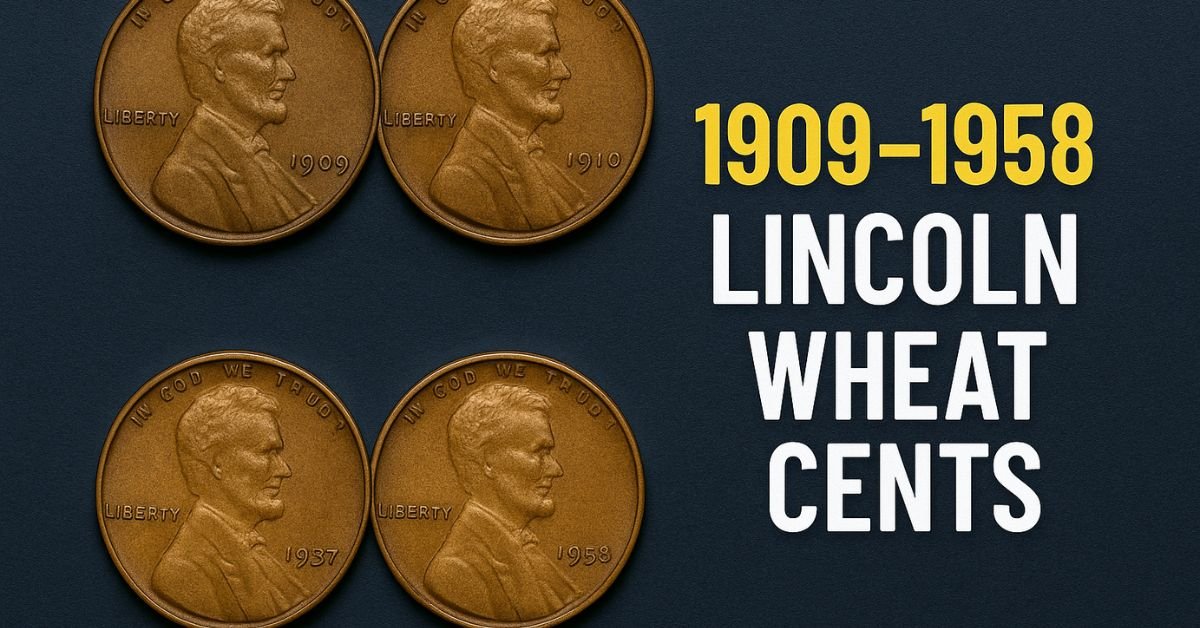

For coin enthusiasts and history buffs alike, few collectibles spark as much excitement as the Lincoln Wheat Cent better known as the Wheat Penny. Minted from 1909 to 1958, these one-cent coins are more than just bits of copper; they’re miniature time capsules reflecting America’s industrial rise, wartime resilience, and cultural nostalgia. Once ordinary pocket change, many of these pennies now command prices that would surprise even seasoned collectors.
What Makes the Wheat Penny Special
The Wheat Penny debuted in 1909, commemorating the 100th birthday of Abraham Lincoln — the first U.S. coin to feature a real person. Designer Victor David Brenner created the portrait we still see on modern cents, pairing it with two wheat ears on the reverse as a symbol of national prosperity.
Minted in Philadelphia (no mint mark), Denver (D), and San Francisco (S), these coins carried unique production histories that dramatically affect today’s values. Because of their pre-zinc, high-copper composition (95% copper), Wheat Pennies also hold intrinsic metal worth, making them favorites among both investors and collectors.
How Values Have Evolved Over the Past Decade
From 2015 to 2025, the value of Wheat Pennies has quietly surged thanks to rising copper prices, growing interest in collectibles, and a booming online auction market.
| Year | Common-Date Circulated Value | Uncirculated/Key-Date Average | Market Drivers |
|---|---|---|---|
| 2015–2017 | $0.05–$0.15 | Up to $100 | Collector revival & stable copper prices |
| 2020 | $0.10–$0.25 | $150–$500 (rare types) | Pandemic-era online trading surge |
| 2025 | $0.15–$0.50 | $5–$1,000+ | Global auction access, nostalgia & scarcity |
Even the most common 1940s–1950s examples now sell for several times their face value, while early-issue and error coins have entered the four- and five-figure range.
Top Valuable Wheat Pennies to Look For
1909-S VDB – The ultimate Wheat Penny rarity. Only 484,000 minted at the San Francisco Mint, with designer Brenner’s initials (V.D.B.) on the reverse. Worth $800–$1,500+, depending on grade.

1914-D – Scarce from Denver with limited surviving examples. Fine-condition coins regularly sell for $2,000 or more.
1922 “No D” Error – A Denver Mint issue missing its mint mark due to a worn die. Collectors pay hundreds to thousands depending on visibility and condition.
1931-S – With a small mintage of 866,000, it’s among the last true key dates. Expect values between $75–$150 in circulated grades.
1943 Copper Penny – A genuine American legend. Most 1943 cents were steel for wartime rationing, but a few copper ones slipped through. Authentic examples have sold for $150,000–$200,000+ at auction.
1955 Double Die Obverse – One of the most famous minting errors in U.S. history, with clear doubling on “LIBERTY” and “IN GOD WE TRUST.” Prices range from $1,000 to $5,000, sometimes more in pristine red-toned condition.

Why Wheat Pennies Are Rising in Value
Several forces have fueled their decade-long appreciation:
- Historical nostalgia: They connect collectors to pre- and post-war America.
- Limited supply: Millions were melted for copper after 1982’s metal change.
- Online marketplaces: Sites like Heritage Auctions and eBay expanded access.
- Metal value: Their 95% copper composition gives them tangible worth beyond collectibility.
Add in growing global interest in U.S. coinage, and Wheat Pennies have transitioned from childhood curiosities to legitimate investment assets.
How to Identify and Grade Yours
Condition determines everything. The coin industry uses a 1–70 grading scale (Poor to Mint State). To evaluate:
- Check the mint mark: “D” for Denver, “S” for San Francisco — key to determining rarity.
- Inspect details: Sharp hairlines, full wheat stalks, and defined lettering indicate higher grades.
- Luster: Bright red or reddish-brown tones command premiums over dull, dark examples.
- Avoid cleaning: Polishing damages patina and can cut value dramatically.
When in doubt, submit your coin to a professional service such as PCGS or NGC for authentication and grading — a must for high-value finds.
Future Value Outlook
Experts predict that Wheat Pennies will continue appreciating through the next decade as high-quality examples disappear into private collections. Common dates may stay under a dollar, but key dates and mint errors could rise another 20–40% as collector demand grows worldwide.

So, whether you’ve found a jar of old pennies in the attic or inherited a family coin box, you might be sitting on hidden treasure.
Conclusion
The Lincoln Wheat Cent remains a symbol of America’s enduring story — from early 20th-century optimism to modern collector passion. Over the past ten years, values have climbed steadily, and interest shows no signs of slowing. Each coin carries a piece of history, and some carry fortunes.
The next time you spot one of those humble Wheat Pennies, give it a closer look — it might just be worth more than you think.
FAQs
What years were Wheat Pennies made?
Between 1909 and 1958, after which the design switched to the Lincoln Memorial reverse.
What is the rarest Wheat Penny?
The 1909-S VDB, due to its low mintage and historic design controversy.

Are all 1943 pennies valuable?
No, most are common steel cents. Only the copper versions are rare and extremely valuable.
How do I tell if my penny is copper or steel?
Use a magnet – steel cents stick, copper ones don’t.
Where should I sell rare Wheat Pennies?
Through reputable coin dealers, auctions, or certified online platforms. Always verify authentication first.
