
The Yamaha YZF-R1 has always lived in that small, sacred space of motorcycling reserved for machines that aren’t just fast they’re legends. And for 2025, Yamaha isn’t just polishing the crown; it’s reforging it. The new YZF-R1 2025 arrives sharper, smarter, and more race-oriented than it’s been in years, leaning harder than ever into its MotoGP DNA.
If you’re the kind of rider who measures weekends in lap times, who knows the difference between a good apex and a perfect one, or who simply wants the raw theater of a superbike on a Monday morning commute, the 2025 R1 is a serious contender for the top of your wishlist.
A Design That Bleeds Aero and Attitude
The first thing you notice about the 2025 Yamaha R1 is the wind-tunnel intent behind every crease, curve, and cut. Yamaha’s design team didn’t simply update bodywork — they rebuilt the bike around MotoGP principles.
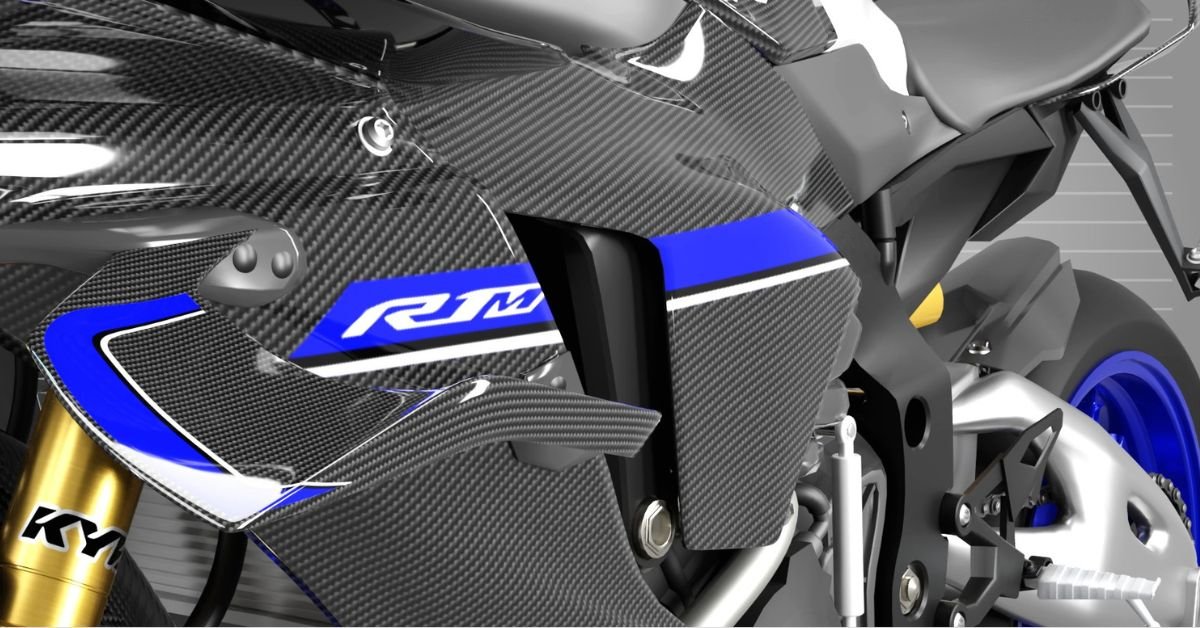
The front fascia gets a new LED headlamp cluster tucked deep within sharper ducts, while the fairing integrates functional winglets that improve downforce at high speed without adding drag. Air channels now push more flow toward the radiator and engine, a change you feel when hammering down back straights where heat usually builds fast.
The compact tail section, sculpted fuel tank, aggressive stance, and new racing colorways give the 2025 R1 a presence that’s less “sportbike on the street” and more “pit lane escapee.”
The 998cc Crossplane Engine Gets Even Meaner
Yamaha didn’t need to tinker with its famed 998cc crossplane inline-four, but it did — and the result is a powerband that hits harder in the mid-range and pulls longer up top.

Refined ECU mapping sharpens throttle feel, especially during lean-angle-heavy situations where precision matters most. Off/on transitions feel smoother, the signature crossplane torque feels more linear, and the R1’s top-end now feels like it’s holding power deeper into redline.
Mated to a 6-speed gearbox with an even snappier quickshifter, gear transitions are brutally quick yet clean — ideal for riders who want that split-second advantage on track days.
Electronics: The Smartest R1 Yet
The leap forward in electronic rider aids might be the biggest reason the 2025 model feels new from the saddle. The R1 now carries Yamaha’s most advanced suite of smart systems to date, all fed by a highly responsive six-axis IMU.
Expect:
- Ride modes with deeper customization
- Traction and slide control tuned for track aggression
- Launch control for perfect starts
- Wheelie control that steps in only when you’d actually want it
- Cornering ABS designed for high-speed stability
The refreshed full-color TFT display is more intuitive, easier to scan at speed, and now pairs with smartphone connectivity for ride analytics, alerts, and Yamaha Y-Connect functionality.

These aren’t gimmicks. They’re tools — the kind that make expert riders faster and newer riders safer.
Precision Handling on a Track-Focused Chassis
Underneath the bodywork sits the familiar but refined Deltabox aluminum frame, lighter and stiffer in key spots to improve feedback and stability. The most meaningful upgrade? The adoption of Öhlins electronic suspension, a system that reads the road or track conditions and adjusts damping on the fly.
Paired with grippier tires and improved aero, the 2025 R1 corners with superhuman confidence. Lean it in, and the chassis feels locked to your line. Push harder, and the suspension adjusts to keep the bike supported without harshness.
Stopping power comes from Brembo components, tuned to offer powerful bite with predictable modulation — essential when you’re shedding speed from triple-digit straightaway blasts.
Rider Ergonomics That Work at 150 mph… and 50
Superbikes aren’t known for comfort, but Yamaha clearly spent time refining the R1’s ergonomics for long sessions. The revised seat contour, repositioned footpegs, and reshaped tank allow more natural knee grip and upper-body movement during transitions.

Heat management improvements and ventilation tweaks make a real difference for riders who actually use their R1s for more than 12 laps and a photo op.
In short: it’s still aggressive, but more rider-focused than before.
Quick Spec Breakdown
| Feature | Specification |
|---|---|
| Engine | 998cc liquid-cooled crossplane inline-four |
| Output | Improved mid-range & top-end performance |
| Transmission | 6-speed with quickshifter |
| Electronics | IMU-based traction, slide, wheelie, launch control; cornering ABS |
| Suspension | Öhlins adaptive electronic suspension |
| Brakes | Brembo discs with cornering ABS |
| Display | Full-color TFT with connectivity, ride modes |
| Frame | Deltabox aluminum chassis |
Why the 2025 R1 Matters
Superbikes are evolving — some brands are going more road-friendly, others more electronics-heavy. Yamaha has chosen a third path: refine what works, modernize what needs updating, and protect the soul of a machine that’s been a benchmark for 26 years.
The 2025 Yamaha R1 isn’t just fast; it’s precise. It’s not just advanced; it’s intentional. And it’s not just a superbike; it’s a continuation of Yamaha’s pure racing DNA for riders who still want a machine that feels alive under them.
If you’re an enthusiast hunting for a motorcycle that blends pure supersport aggression, MotoGP technology, and razor-sharp handling, the 2025 Yamaha YZF-R1 delivers the full experience. The updated engine, aero improvements, IMU-driven electronics, and high-end suspension make it one of the strongest contenders in the liter-class segment.

For track riders, it’s a weapon. For sport riders, it’s a statement. For superbike purists, it might just be the most satisfying R1 Yamaha has built in years.
FAQs
What’s new in the Yamaha YZF-R1 2025?
Aerodynamic redesign, refined engine mapping, upgraded electronics, and adaptive Öhlins suspension.
Does the 2025 R1 still use the crossplane engine?
Yes the iconic 998cc crossplane inline-four remains, now with smoother mid-range and stronger top-end performance.
Is the new R1 track-focused?
Absolutely. The chassis tuning, electronics, and aero enhancements make it extremely track-ready.
Does it support connectivity?
Yes, via Yamaha’s Y-Connect for ride data, notifications, and smart diagnostics.
What braking system does it use?
Brembo discs paired with cornering ABS for high-speed stability and stopping precision.
